
Copied
Timing Matters: Time-Restricted Eating Without Calorie Restriction May Reduce Disease Activity and Improve Inflammation in Adults with Crohn’s Disease
A first-of-its-kind randomized controlled study found that time-restricted eating, a form of intermittent fasting, can reduce symptomatic disease activity and systemic inflammation in adults with Crohn’s disease living with obesity.
It is time to challenge the outdated image of the underweight patient with inflammatory bowel disease (IBD), as studies suggest that 40% of people with IBD are living with overweight or obesity.1 Some recent work suggests that increased visceral fat within the abdomen that surrounds the organs is associated with more aggressive disease behavior and reduced response to therapy in Crohn's disease (CD), although evidence linking it to postoperative complications remains mixed.2,3
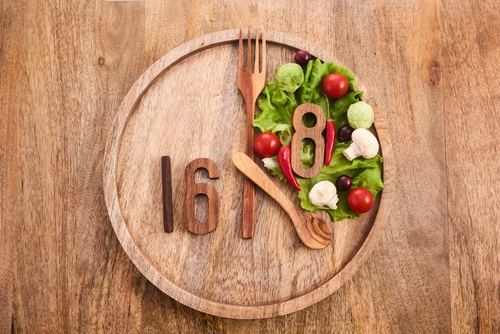
A recent randomized controlled study found that eating within an 8-hour window and fasting for 16 hours significantly reduced symptomatic disease activity and inflammation in adults with CD living with overweight or obesity in clinical remission or with mild disease activity.4
In non-IBD populations and rodent models,5 intermittent fasting has been shown to reset circadian rhythms, promote adipose tissue remodeling, modify the gut microbiome, and improve insulin resistance. To investigate the effects of intermittent fasting in IBD, the authors randomly assigned 35 adults with CD and overweight or obesity (body mass index [BMI] >25 kg/m²) to either a time-restricted eating intervention or an unrestricted eating pattern while continuing standard medical therapy. Despite differences in meal timing, energy intake was similar between the two groups.
The intervention involved 16 hours of fasting and eating their usual diet within an 8-hour eating window, 6 days per week in addition to their standard medical therapies. One full day off per week was allowed to promote flexibility and adherence.
People with CD who fasted for 12 weeks lost weight and visceral fat, had reduced inflammation throughout the body, and reported fewer symptoms. Most participants in the fasting group achieved a reduction in BMI of at least one unit, and greater reductions in BMI were associated with larger improvements in digestive symptoms and inflammatory markers. Disease activity (assessed by Harvey-Bradshaw Index scores) decreased by 40% over 12 weeks, indicating improvement in symptom burden, in particular stool frequency.
In addition to feeling better, people in the fasting group showed important improvements in their metabolism and microbiome. Proteins released from fat tissue involved in controlling metabolism (named leptin, adipsin, and plasminogen activator-1) shifted in a healthier direction. The fasting group also had a more diverse gut microbiome and a greater capacity to produce fecal short-chain fatty acids that support gut health.
At baseline and week 12, patients with poor diets exhibited a gut microbiome enrichment with pro-inflammatory species. This suggests that time-restricted feeding is insufficient, and diet quality remains essential to support a healthy, anti-inflammatory gut microbiome.
Intermittent fasting emerges as a potential low-cost, accessible strategy that can complement medications for people living with Crohn’s disease who are overweight.
References:
- Pereza J, Abbott E, Shneyderman M, et al. The rising epidemic of obesity in patients with inflammatory bowel disease. Curr Treat Options Gastroenterol. 2024; 22:133-144. doi: 10.1007/s11938-024-00453-5.
- Nguyen NH, Ohno-Machado L, Sandborn WJ, et al. Obesity is independently associated with higher annual burden and costs of hospitalization in patients with inflammatory bowel diseases. Clin Gastroenterol Hepatol. 2019; 17(4):709-718.e7. doi: 10.1016/j.cgh.2018.07.004.
- Yarur AJ, Bruss A, Moosreiner A, et al. Higher intra-abdominal visceral adipose tissue mass is associated with lower rates of clinical and endoscopic remission in patients with inflammatory bowel diseases initiating biologic therapy: results of the Constellation study. Gastroenterology. 2023; 165(4):963-975.e5. doi: 10.1053/j.gastro.2023.06.036.
- Haskey N, Ye J, Lewis A, et al. Time-restricted feeding reduces body mass index, visceral adiposity, systemic inflammation, and clinical disease activity in adults with Crohn’s disease: a randomized controlled study. Gastroenterology. 2026; 170(5):1051-1054. doi: 10.1053/j.gastro.2025.11.008.
- Lavallee CM, Bruno A, Ma C, et al. A review of the role of intermtittent fasting in the management of inflammatory bowel disease. Ther Adv Gastroenterol. 2023; 16:17562848231171756. doi: 10.1177/17562848231171756.

Andreu Prados is a science and medical writer specializing in making reliable evidence of non-prescription therapeutics for gastrointestinal conditions understandable, engaging and ready for use for healthcare professionals and patients.

Dr. Natasha Haskey is a clinical scientist and Registered Dietitian with over 20 years of practical experience in nutrition therapy for IBD. She co-authored the textbook called "Gut Microbiota: Interactive effects on nutrition and health"- the first textbook on nutrition and the microbiome for health professionals.


Support our Mission
Your donation will help us to enhance the well-being and health outcomes of patients with GI conditions.
Donate