Mediterranean Diet
An evidence-based eating pattern shown to support gut health, inflammation, and quality of life in people with IBD and IBS.

Mediterranean Diet for Digestive Health
The Mediterranean Diet (MED) is a well-studied dietary pattern associated with improved cardiovascular, metabolic, and overall health. Increasingly, research supports its role in digestive health, including benefits for people living with Inflammatory Bowel Disease (IBD) and Irritable Bowel Syndrome (IBS).
Unlike diets that focus primarily on eliminating symptom triggers, the Mediterranean diet emphasizes food quality, diversity, and sustainability, making it a good option across many chronic gastrointestinal (GI) conditions.
What is the Mediterranean Diet?
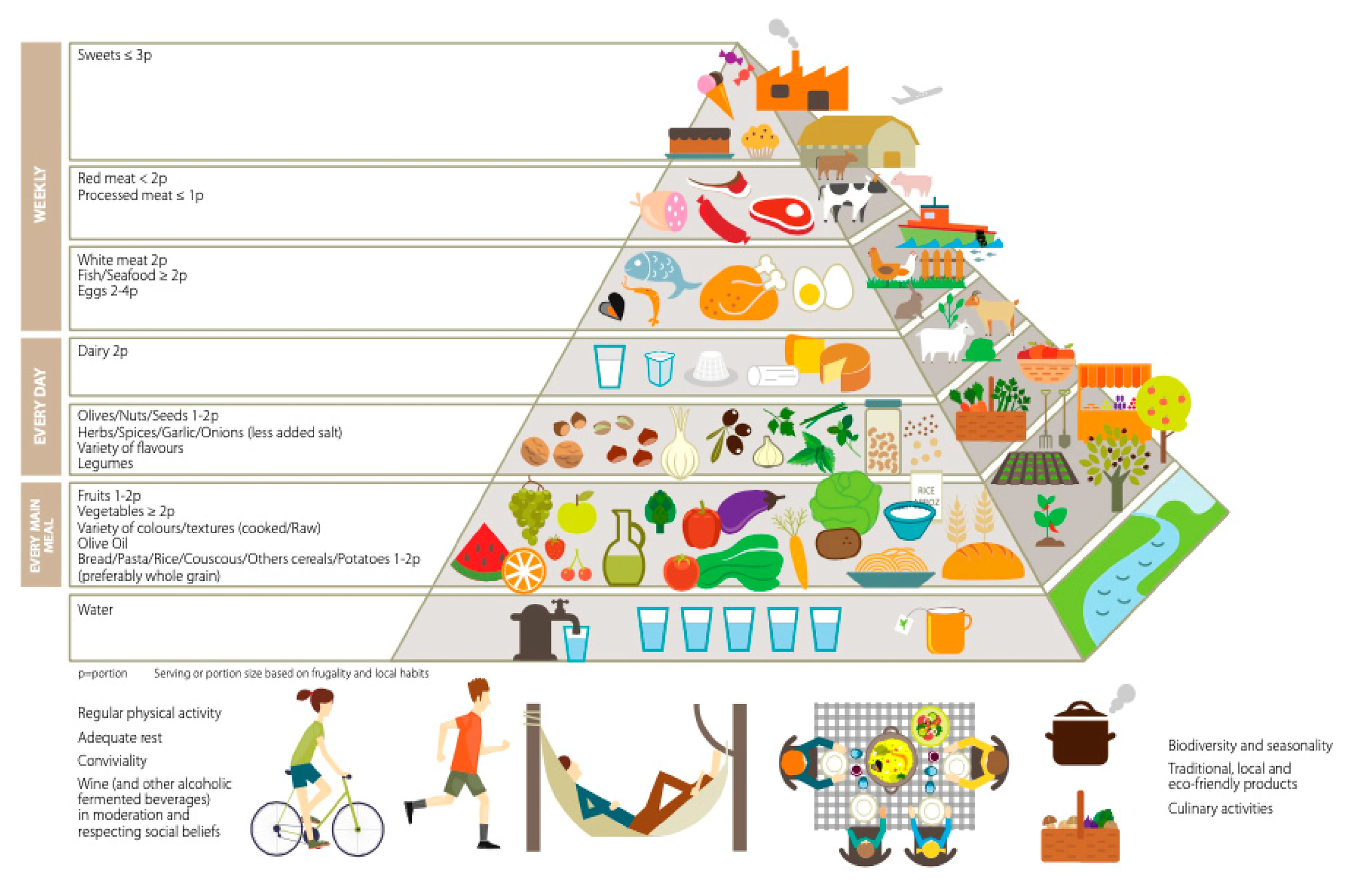
The Mediterranean Diet is characterized by a high intake of plant-based foods, healthy fats, and lean protein sources.
This pattern provides dietary fiber, polyphenols, antioxidants, and unsaturated fats that support gut health and help regulate inflammation.¹˒²

Health Benefits Beyond the Gut
In addition to improving symptoms in IBD and IBS, strong evidence supports the Mediterranean diet’s benefits in:
- Cardiovascular disease
- Cancer prevention
- Type 2 diabetes
- Metabolic Health
Much of these benefits are attributed to reduced systemic inflammation and higher consumption of vegetables, fruits, nuts, fish, avocados, and olive oil.3,4
The Mediterranean diet may also serve as a preventive strategy against:
The Mediterranean Diet and IBD
How Might the Mediterranean Diet Benefit IBD?
The Mediterranean diet may benefit individuals with IBD through several interconnected mechanisms. One proposed mechanism is through the diet’s anti-inflammatory effects on the gut microbiome. Multiple studies demonstrate that Mediterranean diet patterns favorably alter the microbiome and reduce inflammation.7,8,9 The benefits include:

What Does the Evidence Show?
Growing research supports the Mediterranean diet as a beneficial dietary pattern for people with Crohn’s disease and ulcerative colitis.
The benefits of MED also extend to pediatric patients and study findings support the Mediterranean diet as a safe and effective dietary approach for pediatric IBD. In a prospective, randomized study of 100 patients (aged 12-18) with mild to moderate disease, half were given MED for 12 weeks.12 After this dietary change, the MED group showed:
The Mediterranean Diet and IBS
How Might the Mediterranean Diet Improve IBS Symptoms?
Research suggests that the Mediterranean diet may help improve IBS symptoms through several interconnected mechanisms. Proposed mechanisms include 15, 16, 17:

What Does the Evidence Show?
Why Consider the Mediterranean Diet for IBS?
Most dietary approaches for IBS focus on restricting known symptom triggers. While effective for some, this strategy does not always address mental health, gut–brain interaction, or long-term dietary adequacy.
Poor mental health is common in IBS, and greater psychological burden is associated with more healthcare use, increased medication reliance, and lower quality of life.13
Recent research has explored whether the Mediterranean diet — known for its benefits beyond the gut — could provide broader support for people with IBS.
Implementing the Mediterranean Diet in IBD and IBS
Following the Mediterranean diet can be challenging for some individuals, particularly those with active IBD, strictures, or long-standing low-fiber intake.
Individual tolerance varies, and personalization is essential.
Always work with your healthcare professional when implementing dietary changes.
Combining the Mediterranean Diet and Low FODMAP Diet
While this combined approach has not yet been tested in clinical trials, researchers have proposed that enriching a Low-FODMAP diet with Mediterranean diet components that are naturally low in FODMAPs may:18
- Preserve gut microbiota diversity
- Improve nutritional adequacy
- Reduce the downsides of long-term restriction
This strategy may be particularly useful for individuals with IBS or IBD who benefit from FODMAP reduction but seek a more sustainable long-term dietary pattern.
The Mediterranean Diet and Celiac
What If You Have Celiac Disease?
The Mediterranean diet can be safely followed by people with celiac disease when adapted to be strictly gluten-free.
Many Mediterranean diet staples — such as fruits, vegetables, legumes, fish, olive oil, nuts, seeds, rice, and naturally gluten-free whole grains — align well with a gluten-free eating pattern.
However, careful attention is needed to avoid gluten-containing grains and cross-contamination.
Not Sure Which Approach is Right for You?
Nutrition needs vary based on diagnosis, symptoms, and individual tolerance. Working with a registered dietitian experienced in GI conditions can help personalize the Mediterranean diet for IBD, IBS, or celiac disease.
References
- Bach-Faig A, Berry EM, Lairon D, et al. Mediterranean diet pyramid today. Science and cultural updates. Public Health Nutr. 2011;14(12A):2274-2284. doi:10.1017/S1368980011002515
- Chicco, F., Magrì, S., Cingolani, A., Paduano, D., Pesenti, M., Zara, F., Tumbarello, F., Urru, E., Melis, A., Casula, L., Fantini, M. C., & Usai, P. (2021). Multidimensional Impact of Mediterranean Diet on IBD Patients. Inflammatory Bowel Diseases, 27(1), 1–9. https://doi.org/10.1093/ibd/izaa097
- Martini D. Health Benefits of Mediterranean Diet. Nutrients. 2019;11(8):1802. Published 2019 Aug 5. doi:10.3390/nu11081802
- Tosti V, Bertozzi B, Fontana L. Health Benefits of the Mediterranean Diet: Metabolic and Molecular Mechanisms. J Gerontol A Biol Sci Med Sci. 2018;73(3):318-326. doi:10.1093/gerona/glx227
- Illescas O, Rodríguez-Sosa M, Gariboldi M. Mediterranean Diet to Prevent the Development of Colon Diseases: A Meta-Analysis of Gut Microbiota Studies. Nutrients. 2021;13(7):2234. Published 2021 Jun 29. doi:10.3390/nu13072234
- Khalili H, Håkansson N, Chan SS, et al. Adherence to a Mediterranean diet is associated with a lower risk of later-onset Crohn's disease: results from two large prospective cohort studies. Gut. 2020;69(9):1637-1644. doi:10.1136/gutjnl-2019-319505
- Reddavide R, Rotolo O, Caruso MG, et al. The role of diet in the prevention and treatment of Inflammatory Bowel Diseases. Acta Biomed. 2018;89(9-S):60-75. Published 2018 Dec 17. doi:10.23750/abm.v89i9-S.7952
- Tomasello G, Mazzola M, Leone A, et al. Nutrition, oxidative stress and intestinal dysbiosis: Influence of diet on gut microbiota in inflammatory bowel diseases. Biomed Pap Med Fac Univ Palacky Olomouc Czech Repub. 2016;160(4):461-466. doi:10.5507/bp.2016.052
- Ghosh TS, Rampelli S, Jeffery IB, et al. Mediterranean diet intervention alters the gut microbiome in older people reducing frailty and improving health status: the NU-AGE 1-year dietary intervention across five European countries. Gut. 2020;69(7):1218-1228. doi:10.1136/gutjnl-2019-319654
- Lewis JD, Sandler RS, Brotherton C, et al. A Randomized Trial Comparing the Specific Carbohydrate Diet to a Mediterranean Diet in Adults With Crohn's Disease [published correction appears in Gastroenterology. 2022 Nov;163(5):1473]. Gastroenterology. 2021;161(3):837-852.e9. doi:10.1053/j.gastro.2021.05.047
- Godny L, Reshef L, Pfeffer-Gik T, et al. Adherence to the Mediterranean diet is associated with decreased fecal calprotectin in patients with ulcerative colitis after pouch surgery. Eur J Nutr. 2020;59(7):3183-3190. doi:10.1007/s00394-019-02158-3
- El Amrousy D, Elashry H, Salamah A, Maher S, Abd-Elsalam SM, Hasan S. Adherence to the Mediterranean Diet Improved Clinical Scores and Inflammatory Markers in Children with Active Inflammatory Bowel Disease: A Randomized Trial. J Inflamm Res. 2022;15:2075-2086. Published 2022 Mar 29. doi:10.2147/JIR.S349502
- Black CJ, Ford AC. Global burden of irritable bowel syndrome: trends, predictions and risk factors. Nat Rev Gastroenterol Hepatol. 2020; 17(8):473-486. doi: 10.1038/s41575-020-0286-8.
- Serra-Majem L, Tomaino L, Dernini S, et al. Updating the Mediterranean diet pyramid towards sustainability: focus on environmental concerns. Int J Environ Res Public Health. 2020; 17(23):8758. doi: 10.3390/ijerph17238758.
- Staudacher HM, Mahoney S, Canale K, et al. Clinical trial: A Mediterranean diet is feasible and improves gastrointestinal and psychological symptoms in irritable bowel syndrome. Aliment Pharmacol Ther. 2024; 59(4):492-503. doi: 10.1111/apt.17791.
- Singh P, Dean G, Iram S, et al. Efficacy of Mediterranean diet vs. low-FODMAP diet in patients with nonconstipated irritable bowel syndrome: a pilot randomized controlled trial. Neurogastroenterol Motil. 2025; 37(10):e70060. doi: 10.1111/nmo.70060.
- Bamidele JO, Brownlow GM, Flack RM, et al. The Mediterranean diet for irritable bowel syndrome: a randomized clinical trial. Ann Intern Med. 2025; 178(12):1709-1717. doi: 10.7326/ANNALS-25-01519.
- Kasti A, Petsis K, Lambrinou S, et al. A combination of Mediterranean and low-FODMAP diets for managing IBS symptoms? Ask your gut! Microorganisms. 2022; 10(4):751. doi: 10.3390/microorganisms10040751.
MED Research Articles
Delicious and Nutritious Recipes
Explore all recipesOur recipe section offers a wide range of options that align with various nutritional therapies, ensuring you can find meals and snacks that are both flavorful and supportive of your dietary needs.
.svg)
%2520%2526%2520Spinach%2520Curry.jpeg)